Skip to main content

In US home health care, patients recover at home after a hospital stay, visited by nurses, physiotherapists and other clinicians that an agency schedules and coordinates. Care for one patient involves field clinicians, office staff and the referring physician, who need to share updates quickly. Patient data falls under strict US privacy rules.
The client, a home health agency, built a messaging platform for this work, and other agencies now use it. Each patient has a group where the care team coordinates, in an interface close in design to WhatsApp Web.
Home health teams need things a general messaging app cannot do. A sender has to know that a clinician has read a critical update about a patient. Urgent issues have to reach everyone on the care team at once. Discussion between clinicians and office staff has to stay away from the patient, with only selected messages shared with them. Staff also need patient information from the agency's EMR and readings from medical devices in the same place as the conversation, and visit paperwork such as scheduling or cancellation forms has to move between office and field without separate tools.
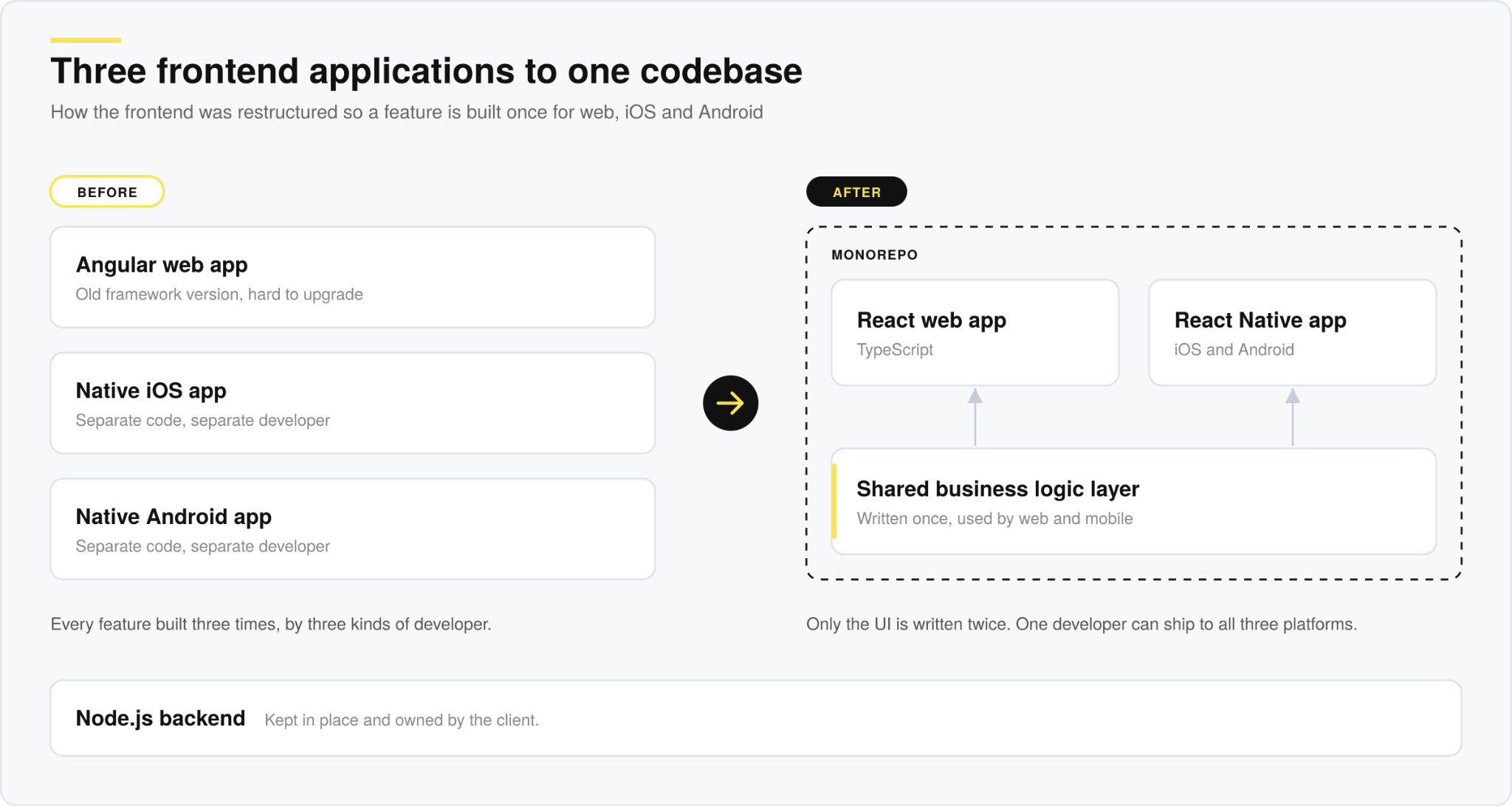
The client's platform was built to meet these needs, but its frontend made progress slow. The product ran as three separate applications (an Angular web app on an old framework version, a native iOS app and a native Android app), so each new feature was built three times by developers with different skill sets. A backlog of hard-to-fix bugs kept growing, and the client had to keep hiring developers to deal with it, leaving less room for the new features agencies were asking for.
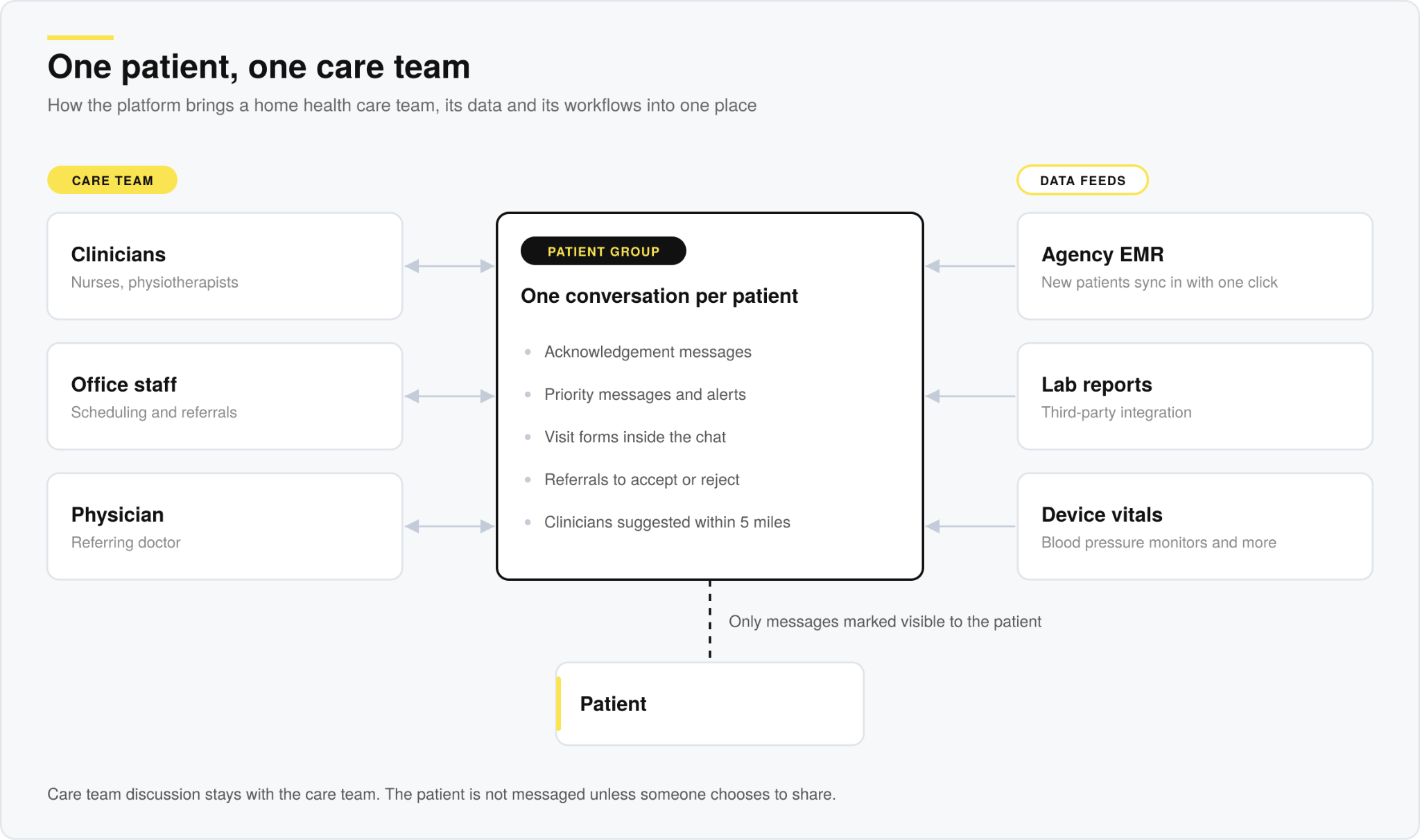
Technogise took ownership of the whole frontend and rewrote it in React and React Native, with business logic shared across web and mobile in one monorepo. The existing design stayed familiar, so office staff and clinicians did not have to relearn their daily tool.
On that base, Technogise built features around how home health agencies work:
Patient data privacy shaped technical choices throughout. Error monitoring is configured so no real patient data is sent, and the mobile apps block screenshots.
A gradual rollout protected agencies from disruption in the middle of patient care. The new app went first to the client's in-house agency, with a button to switch back to the old app at any time. Technogise refined the app based on that group's feedback, then rolled it out to other agencies in stages. Feedback is collected through an in-app button and continues to shape the roadmap.
Technogise built the messaging layer from scratch on WebSockets, and new message types are added through configuration. Each healthcare feature above is a message type or workflow added on that foundation, which is how the platform keeps growing as agencies ask for more.

| © 2026 Technogise