Whether you're facing a full platform transformation or looking to reduce the cost and risk of your current delivery infrastructure we can help you figure out where to start and how to move and use technology as a force multiplier.
Talk to Our ExpertsThis is where AI earns its place. Reading undocumented codebases, generating test coverage from observed behaviour, mapping dependency chains that would take weeks to trace manually AI compresses the discovery phase dramatically. The engineering team stays in control of every decision, but they have far more to work with far sooner.
Before anything changes in a production system, we establish protective cover: characterisation tests that capture what the system actually does today, observability to see what's happening in real time, and a delivery pipeline that lets the team move without fear of breaking things they can't see.
With that foundation in place, the core work can proceed safely. Whether the right path is incremental refactoring, re-architecture, a strangler-fig migration, or domain decomposition the approach is driven by what the system needs, not by what's easiest to sell.
AI continues to assist throughout: generating functional test suites to validate migrated behaviour, accelerating refactoring cycles, and identifying code patterns that signal architectural risk. But the engineering judgement knowing when to refactor and when to rewrite, where to draw the seams is ours to provide.
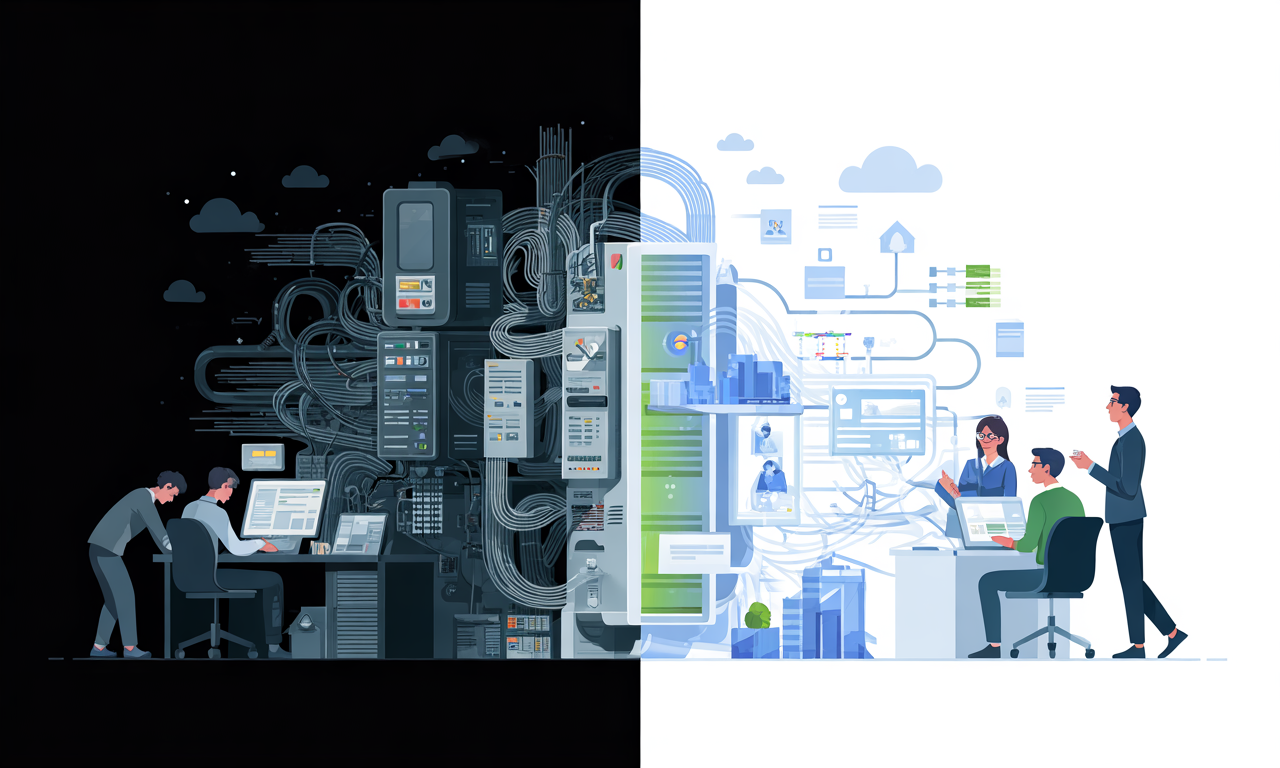
A modernized codebase running on a fragile infrastructure is still a fragile system. The supporting layer how it's built, deployed, configured, observed, and tested determines whether the modernized system is actually maintainable going forward. We treat this as engineering work, not an afterthought.
Engineers should be able to spin up a complete, production-like environment with a single command. When local and production environments drift apart, confidence in development erodes. We establish container based local setups, Testcontainers for integration testing, and systematic drift detection so what works locally is what works in production.
Infrastructure that lives in someone's head or in a wiki is infrastructure that breaks unpredictably. We provision, configure, and version everything as code: environments are reproducible, changes are reviewed, and rollbacks are possible. Naming conventions, tagging strategies, and environment isolation are enforced from the start, not retrofitted later.
Configuration scattered across environment variables, config files, and institutional memory is a reliability risk. We establish a clear model for application configuration, environment-specific values, and secrets with validation, schema enforcement, and zero-trust secrets rotation built in, not bolted on.
A deployment pipeline is where engineering discipline becomes visible. Slow, manual, or unreliable pipelines are a tax on every engineer every day. We build pipelines that treat configuration, versioning, and policy as first-class concerns so releases are automated, auditable, and reversible.
Systems you cannot see are systems you cannot trust. Structured logs, meaningful metrics, distributed traces, and well-defined SLOs turn a black box into something the team can reason about and act on. Alerting on SLO burn rate not on arbitrary thresholds means the right people are interrupted for the right reasons.
Generating meaningful test coverage for a legacy system is often the hardest part of the modernization effort. AI changes that equation: observed behaviour becomes test cases, edge-case data is generated programmatically, and the team builds confidence in what they're changing without writing every test by hand.
Not every modernization engagement needs to touch the core application. Deployment pipelines that take hours, environments that have drifted from production, configuration managed through manual processes, no observability to speak of fixing the surrounding infrastructure can unlock significant velocity and cost reduction without changing a line of business logic.
We've seen teams move from monthly releases to daily by addressing the infrastructure layer alone. Shorter cycle times, fewer environment-related incidents, and lower operational overhead without the risk of a core system migration.
This kind of engagement is often faster to scope and faster to deliver. It also builds the foundation that a deeper modernization effort will depend on later. Whether the right starting point is the infrastructure, the core system, or both we'll tell you what we actually think, not what maximises the engagement size.
AI accelerates modernization work, but it doesn't replace the engineering judgement that makes modernization decisions durable. Knowing where to draw an architectural seam, when to tolerate duplication and when to eliminate it, how to test a system that was never designed to be tested these require experience that tools alone cannot provide.
Our engineers bring deep backgrounds in test-driven development, system design, clean code, SOLID principles, and DevOps. We've worked on production systems at scale. We know what good looks like, and we know how far a legacy system typically is from it.

| © 2026 Technogise