
Assess impromptu feature requests, manage stakeholder communication, maintain control as a PM, and DO NOT derail your roadmap. Here’s how.
As the age-old product management trope goes, the product manager operates at the intersection of business, technology, and the customer. This expands further to functions such as operations, sales, marketing, finance, legal, and compliance and more. Who owns bringing all these various groups with their often competing priorities and aligns them?
And what happens if they’re not aligned? What’s the worst that could happen?
Well, if you’ve ever been in that unenviable situation where a stakeholder high up the ladder strides into the room and announces that a sudden pivot is needed to build a certain magic feature, you know exactly what I’m talking about.
The gist is that unless current development efforts are diverted to what you should really be building, a major business opportunity will be lost. The cherry on the cake may also arrive in the form of multiple executives requesting their high-priority features to be built immediately.
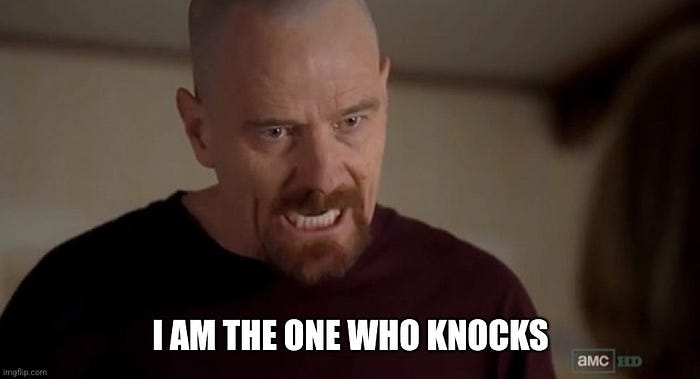
This may seem like a certain Mr. White pushing the boundaries of influence over your roadmap. However, as inconvenient as it may seem, the said higher management executives usually know what they’re talking about and do indeed have valid concerns. If nothing else, they’re experts in the business goals/ revenue concerns of the company and understand market nuances well. They also understand the cost of sudden changes in the product roadmap/ backlog. So why do product managers find themselves with such requests over and over?
Nine times out ten, the answer is a lack of strategic alignment.
The solution clearly isn’t that you, the PM, simply reshuffle the backlog and roadmap. Neither can you ignore what may be an urgent and timely intervention.
Enter cross-collaboration, that flighty soft-skill that MBA resumes are littered with. In the pursuit of hard skills of product management, the softer, more influential skills of communicating, collaborating, and building consensus across multiple touch-points can get deprioritised. Yet, yours truly rediscovered its value while squeamishly sat in a conference room, digesting the above-mentioned announcement atop a barely-digested lunch.
Is the product manager the usual suspect to play shepherd here? This will vary from org to org, but in the quest to be product-driven, it surely helps when the PM takes the lead here.
Let’s unpack what helped (and can help) in such situations. As a product manager, you’ll have to “break bread” with cross-functional teams and build stronger collaboration to create better products. Think of it as balancing the “spicier” ingredients in a well-rounded recipe.
1. Listen very, very carefully
When a stakeholder drops a “must-have” feature on your desk, start by listening.
- Clarify the need: Ask why it’s important, whom it impacts, and what problem it solves. Weighed against business goals and customer value, the urgency of the change should be apparent.
- Assess the urgency: Evaluate if the request is truly urgent or if it can fit into the regular planning cycle.
- Then, explain the trade-offs: If this goes in, something else might have to wait. Be clear about how this will impact delivery timelines.
2. Leverage the Product Strategy
If there are multiple stakeholders, hold a joint prioritisation exercise so that various requests can be evaluated against each other.
Your product strategy will be critical in aligning different priorities with the common product goal and business outcomes.
3. Customers Come First
Not all input is equal. In general, prioritise requests in this order:
Customers: Features solving real customer pain points always win.
Engineering: Tech debt, compliance, or quality improvements deserve a close look.
Market trends: Stay competitive by consulting analysts and keeping an eye on competitors.
Sales and Support: If they’re hearing patterns from customers, it’s worth listening to.
Please note: Customer support/ operations teams are a powerful source of customer insights. Give their inputs a high priority when conducting user research — this prioritisation ladder is more useful in this scenario.Executives: Sometimes their input trumps everything, HIPPOs are a ground reality in many business environments — but not as often as you’d think.
At the end of the day, as the PM, it’s your job to decide what makes the cut.
4. Be Transparent About Your Process
Nobody likes feeling ignored. Manage concerns of your stakeholder diplomatically:
- Centralised process: Make it easy for teams to submit feature requests. Use a centralised system/process like a form or a shared document. While tools like Monday make it easy to capture requests, you can use the project management tool your company is using (I’m assuming something similar to Jira) to create artifacts that can be linked to an Initiative/Epic. This way, your initiative will always be mapped to an insight.
- Review these requests regularly. Consolidate them monthly and update teams quarterly.
- Set clear expectations: Evaluation of each input is guaranteed, but its inclusion into the product roadmap is not.
4. Clarify Your Roadmap Decisions
When you say “no” to a feature request, don’t just stop there, explain why. Maybe it’s too complex to build right now, there are technical constraints, or there’s just not enough evidence it’ll make a big impact.
Whatever the reason, please be upfront and explain your decision concisely. If you’re deferring a feature request, try suggesting an alternative timeline to revisit it or a phased approach to deliver it later.
5. Keep Cross-Functional Teams in the Loop
Educating stakeholders on the product management process and their role in it is a key activity here. Help them understand how their input fits into your process.
Regularly update teams and stakeholders on:
- Requests received
- Delivered features
- Current priorities and expected timelines
- Features deferred/deprioritised with clear explanations.
A monthly check-in with sales, engineering, senior management, and other teams can work wonders for alignment.
6. Own Your Roadmap
You’re the PM, and making tough calls is part of the job description. Balancing executive requests, customer needs, and team capacity isn’t easy, but that’s the job. Stick to your process, communicate clearly, and don’t be afraid to make the final call.
Having to juggle surprise feature requests is never fun, but with a little structure and a lot of transparency, you can turn these moments into opportunities. Look at it this way, in the gauntlet of challenges you’ll face as a PM, this is another opportunity to break bread with the whole team participating in product success and strengthen trust and collaboration.
FIN.